Sitting on a Fortune: How Central Pennsylvania Homeowners Are Putting Years of Appreciation to Work
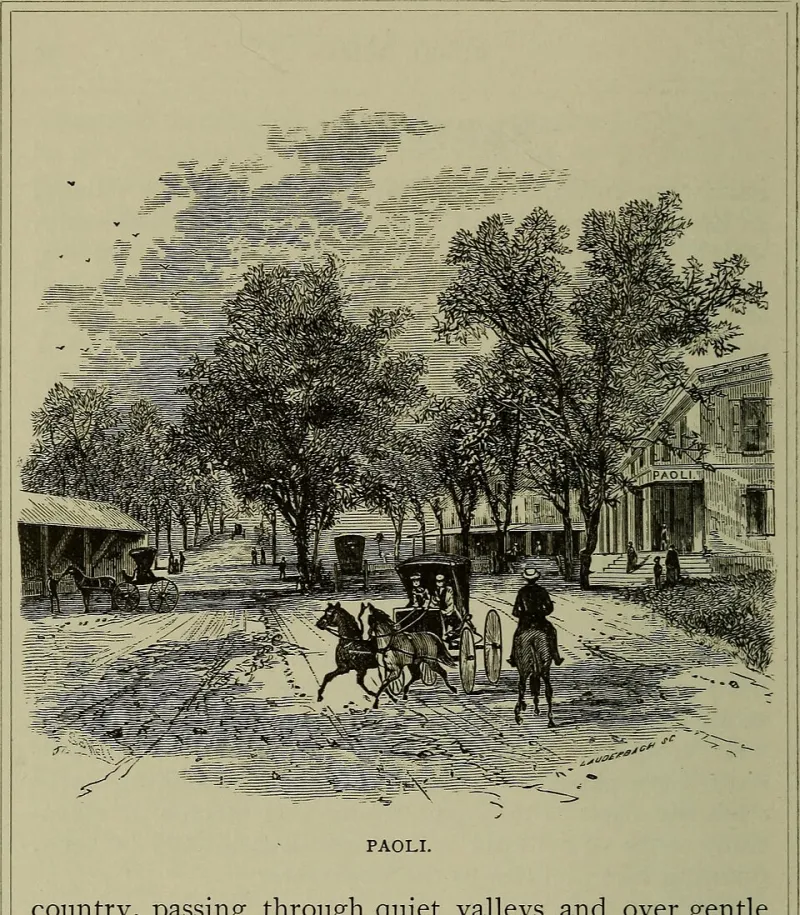
Photo: Internet Archive Book Images, No restrictions, via Wikimedia Commons
For many Central Pennsylvania homeowners, the most significant financial asset they possess is not a retirement account or a stock portfolio — it is the house they have lived in for the past five, ten, or fifteen years. While residents were focused on daily life, regional property values were quietly compounding, building equity that now represents a meaningful source of financial flexibility. Understanding how that equity works, where appreciation has been strongest, and how to access accumulated value without unnecessary risk is increasingly important for homeowners across the region.
A Decade of Steady Gains Across the Region
Central Pennsylvania did not experience the dramatic price spikes that defined coastal markets during the pandemic era, but it has posted consistent and meaningful appreciation that has compounded significantly over time. According to data tracked through the Central Penn MLS property database, median home values across the greater Harrisburg metropolitan area — encompassing Dauphin, Cumberland, and York counties — increased by roughly 45 to 60 percent between 2014 and 2024, depending on the specific municipality and housing type.
Cumberland County communities such as Mechanicsburg, Camp Hill, and Carlisle have registered some of the strongest gains, driven by a combination of strong school district ratings, relative proximity to Harrisburg employment centers, and limited new construction inventory. Buyers willing to pay a premium for established neighborhoods have pushed values upward steadily, rewarding long-term owners handsomely.
In Lancaster County, the story is similarly encouraging. Boroughs and townships that once attracted buyers primarily because of their affordability relative to Philadelphia's suburbs have seen that affordability advantage narrow considerably. A home purchased in Manheim Township or East Hempfield Township a decade ago for $250,000 might reasonably carry a current assessed value approaching $380,000 or higher, depending on condition and specific location.
Centre County, anchored by State College and the Penn State University community, presents a somewhat different dynamic. Values there have historically been tied closely to university enrollment trends and rental demand, but the broader appreciation cycle of the past several years has lifted owner-occupied residential values as well, particularly in neighborhoods that cater to faculty, administrators, and local professionals.
What Equity Actually Means in Practical Terms
Equity is simply the difference between what a home is worth and what is still owed on the mortgage. A homeowner who purchased a property in Mechanicsburg for $220,000 in 2013, made a standard down payment, and has been paying down principal for eleven years may find themselves holding $150,000 or more in equity — perhaps substantially more, depending on current market value.
That figure is not merely a number on a statement. It represents accessible capital that can be deployed for a range of purposes, provided the homeowner approaches the process thoughtfully and with a clear understanding of the terms involved.
Three Primary Vehicles for Accessing Home Equity
Home Equity Loans function as a second mortgage, providing a lump-sum disbursement at a fixed interest rate repaid over a set term. They are particularly well-suited to homeowners with a specific, defined expense — a major renovation project, a college tuition obligation, or a debt consolidation goal. The predictability of fixed monthly payments makes budgeting straightforward.
Home Equity Lines of Credit (HELOCs) operate more like a revolving credit account secured by the home's value. Borrowers can draw funds as needed during a defined draw period, repay them, and draw again. Interest rates on HELOCs are typically variable, which introduces some uncertainty, but the flexibility they offer appeals to homeowners managing ongoing or phased expenses such as a multi-stage home improvement project or a business launch requiring capital in installments.
Cash-Out Refinancing involves replacing the existing mortgage with a new, larger loan and receiving the difference in cash. This approach can be advantageous when current interest rates are favorable relative to the homeowner's existing rate, though in the current rate environment, many homeowners who locked in historically low rates between 2020 and 2022 may find that a cash-out refinance comes at the cost of a meaningfully higher monthly payment.
Each option carries its own risk profile. Because these instruments use the home as collateral, failure to meet repayment obligations can ultimately result in foreclosure. Financial advisors consistently recommend borrowing only what is genuinely needed and maintaining a clear repayment plan before proceeding.
How Central Pennsylvania Homeowners Are Putting Equity to Use
The applications vary considerably across the region, but several patterns emerge when speaking with real estate professionals active in the Central Penn MLS market.
Home renovation remains the most common use case. Aging housing stock throughout Harrisburg's older neighborhoods and in communities like York, Chambersburg, and Lewistown means that many properties require meaningful updates to kitchens, bathrooms, roofing, and mechanical systems. Homeowners who might otherwise struggle to fund these improvements from savings alone are using equity to finance upgrades that simultaneously increase comfort and protect long-term property value.
Small business formation is another growing application. The region's entrepreneurial community has expanded in recent years, and some homeowners are leveraging equity to fund startup costs, purchase equipment, or secure commercial leases — a calculated risk that can pay dividends but demands careful assessment of business viability before committing home equity as capital.
College funding, particularly in communities near Penn State and Dickinson College, represents a third common use. With tuition costs continuing to rise, some families are choosing to access home equity rather than take on high-interest private student loans, viewing the trade-off as financially rational given current rate differentials.
Finally, some older homeowners are using equity strategically as part of a broader retirement transition — funding a move to a smaller property, covering the costs of aging-in-place modifications, or providing family assistance with down payments as adult children enter the housing market.
Is the Appreciation Trend Sustainable?
This is the question that responsible equity planning must address honestly. Central Pennsylvania's appreciation has been supported by genuine fundamentals: population stability, government and healthcare employment anchors, university presence, and relative affordability compared to major metro markets. Those factors are unlikely to reverse sharply.
However, the pace of appreciation observed between 2020 and 2023 — when pandemic-era demand compressed timelines and inflated offers — is not expected to continue indefinitely. Most market observers tracking the Central Penn MLS data anticipate a moderation toward more historically normal appreciation rates in the range of three to five percent annually, which remains healthy but does not replicate the double-digit annual gains some neighborhoods briefly experienced.
Homeowners considering equity access should plan conservatively, assuming that values may plateau or adjust modestly rather than continuing to climb at recent rates. Borrowing to the absolute limit of available equity leaves little margin for market fluctuation.
Calculating Your Position
A practical first step for any homeowner considering equity access is obtaining a current, professional market valuation. Online estimation tools provide a useful starting point, but a comparative market analysis prepared by a licensed real estate professional familiar with Central Pennsylvania's specific submarkets will yield a more accurate picture. From there, subtracting the outstanding mortgage balance produces a baseline equity figure, and most lenders will allow borrowing against a portion of that amount — typically up to 80 or 85 percent of the home's appraised value when combining the existing mortgage and the new instrument.
The equity many Central Pennsylvanians have accumulated represents years of mortgage payments and market appreciation working in parallel. Approaching that asset with the same care and deliberation applied to any significant financial decision is the surest path to putting it to productive use.