Charming or Costly? A Buyer's Field Guide to Historic Homes in Central Pennsylvania
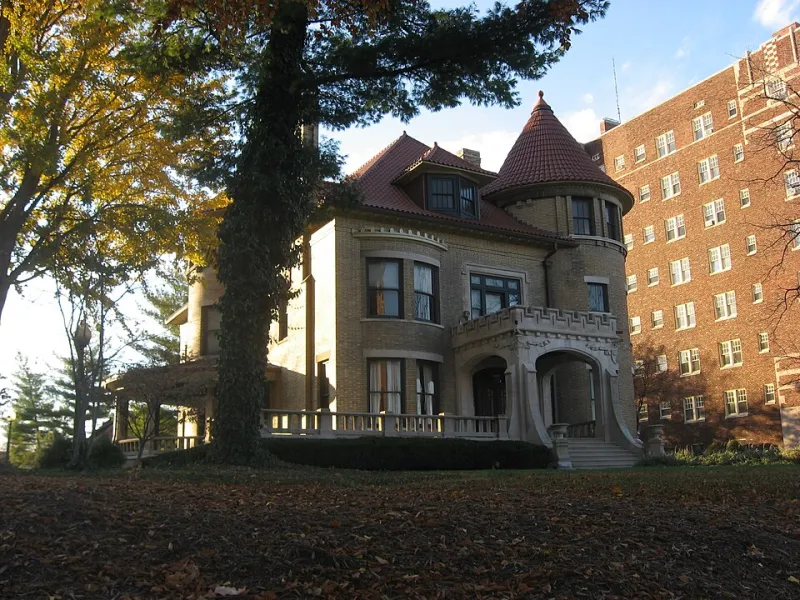
Photo: Nyttend, Public domain, via Wikimedia Commons
Central Pennsylvania's built environment tells the story of the region's history in brick, limestone, and hand-hewn timber. From the Federal-style row homes lining Carlisle's borough streets to the ornate Victorian residences that anchor York's historic neighborhoods, century-old properties here offer a sense of place and craftsmanship that new construction rarely replicates. For buyers who value that character, the region presents remarkable opportunities.
Those opportunities, however, are not without complexity. Older homes demand a fundamentally different evaluation process than modern construction. The features that make a historic property appealing — original plaster walls, wide-plank hardwood floors, decorative cornices, deep window sills — can coexist with systems and structural elements that represent significant deferred investment. Buyers who understand how to read a historic home's condition enter negotiations with confidence; those who do not may find themselves inheriting problems the seller never disclosed.
This guide draws on the realities of Central Pennsylvania's historic housing market to help buyers develop the knowledge they need before making an offer.
Understanding What "Historic" Actually Means in This Market
In Central Pennsylvania, the term historic is applied across a wide spectrum. A property may be considered historic simply because it was constructed before 1940, or it may carry a formal designation as a contributing structure within a National Register Historic District. The distinction matters considerably.
Neighborhoods such as Harrisburg's Midtown and Shipoke districts, Carlisle's Historic District, and portions of downtown Lancaster include properties that fall under the jurisdiction of local historic preservation commissions. In these areas, exterior modifications — window replacement, siding installation, changes to roofline or facade — typically require review and approval. Buyers must understand that this oversight, while protective of neighborhood character, can add time and cost to renovation projects.
Properties that carry individual listing on the National Register of Historic Places or that are contributing structures within a registered district may be eligible for federal and state historic tax credits — a financial benefit discussed in greater detail below. Not every old home qualifies, and the designation process requires documentation. Consulting with a preservation specialist or the Pennsylvania State Historic Preservation Office early in the evaluation process is advisable for buyers targeting formally designated properties.
Structural Red Flags: What to Look for Before the Inspector Arrives
A professional home inspection is indispensable when purchasing any property, and it is especially critical for homes constructed before the widespread adoption of modern building codes. However, a buyer who arrives at a showing with some foundational knowledge will observe details that the untrained eye misses — details that can inform whether to proceed, negotiate, or walk away.
Foundation and masonry. Many of Central Pennsylvania's oldest homes rest on stone or brick foundations. Horizontal cracking in a foundation wall is a more serious indicator of structural stress than vertical cracking. Efflorescence — the white mineral deposits that appear on masonry surfaces — signals moisture infiltration, which warrants further investigation. Soft or crumbling mortar between stone or brick courses indicates that repointing is needed, a repair that ranges from modest to substantial depending on the extent.
Roofing and drainage. Original slate roofing, common on properties from the late nineteenth and early twentieth centuries, can outlast modern asphalt shingles by decades when properly maintained. Inspect individual slates for cracking or sliding and examine the metal flashing at chimneys, valleys, and dormers. Failed flashing is a leading cause of interior water damage in older homes. Gutters and downspouts that direct water toward the foundation rather than away from it compound moisture problems that are already common in below-grade spaces.
Knob-and-tube wiring. Electrical systems in homes built before approximately 1950 may include knob-and-tube wiring, which lacks a grounding conductor and is not compatible with modern three-prong outlets. While knob-and-tube wiring that remains undisturbed is not inherently dangerous, its presence frequently creates complications for homeowner's insurance and represents an update that lenders may require before closing. A qualified electrician should assess the scope of any rewiring project.
Lead paint and plaster. Homes constructed before 1978 may contain lead-based paint. Federal disclosure requirements mandate that sellers provide buyers with known information about lead paint hazards, and buyers have the right to conduct a risk assessment. Original plaster walls, while aesthetically desirable, can develop cracks and delamination over time. Distinguishing cosmetic deterioration from structural failure requires an experienced eye.
The Inspection Process: Why Standard Is Not Sufficient
A standard home inspection performed by a generalist inspector provides a useful baseline, but buyers of historic properties benefit from assembling a more specialized team. A structural engineer can assess foundation integrity and load-bearing systems with greater precision than a general inspector. A licensed electrician familiar with older wiring configurations, a plumber experienced with cast-iron and galvanized supply lines, and a roofing contractor with slate or clay tile experience each bring relevant expertise.
The cost of engaging these specialists — typically a few hundred dollars per consultant — is modest relative to the potential cost of discovering a major deficiency after closing. In a market where historic homes often carry significant renovation potential, a thorough pre-offer assessment also provides the buyer with credible data to support a price adjustment request.
Buyers should request any available documentation of prior permits, renovation work, and system updates from the seller. Unpermitted work in a historically designated property can create compliance obligations that transfer to the new owner.
Historic Tax Credits: A Meaningful Financial Benefit Worth Pursuing
One of the most underutilized advantages available to buyers of formally designated historic properties in Pennsylvania is the Historic Preservation Tax Credit program. At the federal level, the Historic Tax Credit program provides a 20 percent credit against eligible rehabilitation expenditures for income-producing properties that are certified historic structures. Pennsylvania's state-level program complements the federal credit and has supported rehabilitation projects across the region.
For owner-occupied residences, the federal credit does not apply directly, but Pennsylvania has periodically offered state-level incentives for residential historic rehabilitation. Buyers should consult with a tax professional and review current program guidelines through the Pennsylvania State Historic Preservation Office, as eligibility criteria and credit availability can change.
Even where formal tax credits are not available, the investment case for well-chosen historic properties in Central Pennsylvania is often compelling. Homes in established historic districts have demonstrated resilience during market downturns, and the finite supply of genuinely historic properties in desirable neighborhoods supports long-term value.
Renovation Realities: Budgeting for Authenticity
Buyers who intend to renovate a historic property — whether to restore original features or to update systems — should approach cost estimation conservatively. Labor costs for skilled craftspeople capable of working with historic materials are higher than those for standard residential contractors. Sourcing period-appropriate materials for a historically designated property can extend timelines and budgets.
A useful planning approach is to categorize renovation work into three tiers: immediate necessities (roof, foundation, electrical, plumbing), near-term quality-of-life improvements (kitchen, bathrooms, insulation), and long-term aesthetic enhancements (millwork restoration, exterior painting, landscape). Prioritizing the first tier before committing to the second prevents the common mistake of investing in cosmetic improvements while deferred maintenance accelerates.
Central Pennsylvania's historic housing market rewards buyers who approach it with preparation, patience, and the right professional support. The region's architectural heritage is a genuine asset — one that, when purchased with clear eyes and sound information, can deliver both personal satisfaction and lasting financial value.