From City Desks to Country Roads: The Remote Work Migration Reshaping Central Pennsylvania's Housing Market
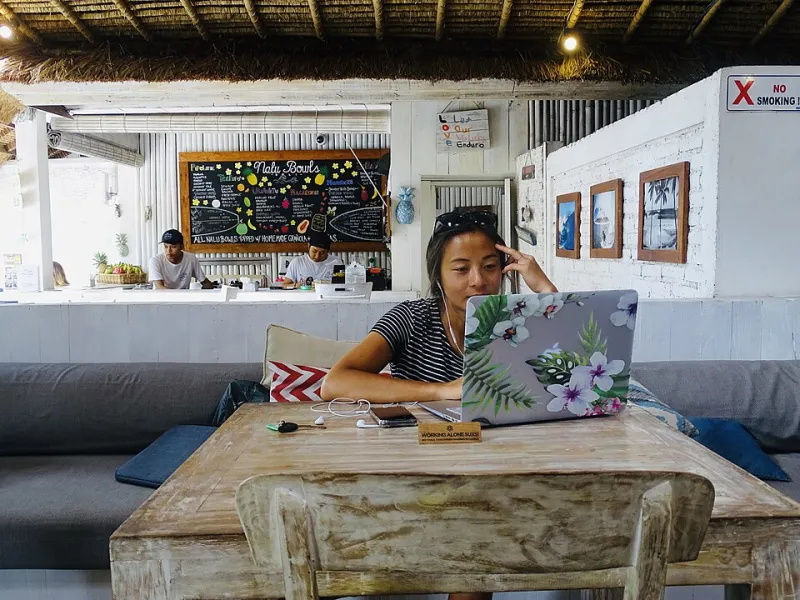
Photo: DominikaMiazek, CC BY-SA 4.0, via Wikimedia Commons
For most of the past century, the gravitational pull of major metropolitan employment centers kept Central Pennsylvania's smaller communities in a kind of demographic equilibrium — pleasant places to live, but places that younger, professionally ambitious residents tended to leave rather than seek out. The pandemic-era normalization of remote work disrupted that logic in ways that continue to ripple through the region's housing market.
Data from listing activity tracked through Central Penn MLS, combined with U.S. Postal Service address-change records and county-level population estimates, paints a consistent picture: communities that once competed for a limited pool of local buyers are now attracting relocating professionals from some of the nation's most expensive and congested metros. The consequences — for home prices, rental availability, local infrastructure, and community character — are significant and still unfolding.
Which Communities Are Growing Fastest
Not every corner of Central Pennsylvania has experienced this shift equally. The communities attracting the most attention from incoming remote workers share a recognizable profile: reasonable proximity to Interstate 81 or the Pennsylvania Turnpike, broadband internet access at least adequate for video conferencing, a walkable or at least serviceable downtown, and housing stock that offers substantially more space per dollar than what buyers left behind.
Carlisle, in Cumberland County, has emerged as one of the more prominent examples. Its historic downtown, established restaurant scene, and location roughly equidistant between Harrisburg and the Maryland border have made it attractive to remote workers departing the Washington D.C. metro area. Median sale prices in Carlisle have increased noticeably over the past three years, and the inventory of available homes has remained persistently tight — a dynamic familiar to any agent working in the area.
Mechanicsburg and Shippensburg have followed similar trajectories, with Shippensburg drawing particular interest from buyers willing to trade some commuting convenience for significantly lower price points. In York County, communities along the Route 30 corridor have seen renewed buyer activity, with some agents reporting that a meaningful share of their transactions now involve buyers relocating from New Jersey or the Philadelphia suburbs.
Further north, Lewisburg in Union County — home to Bucknell University and a well-preserved Victorian commercial district — has attracted remote workers who prioritize quality of life and architectural character over proximity to urban amenities. The Susquehanna River Valley communities of Sunbury and Selinsgrove have also recorded above-trend interest, particularly among buyers in their thirties and forties with young families.
What the Data Shows About Who Is Moving
The demographic profile of incoming remote-work migrants to Central Pennsylvania skews toward mid-career professionals in their early thirties to late forties, frequently with children or plans to start families. Many are employed in technology, finance, consulting, healthcare administration, or federal government contracting — sectors where remote or hybrid arrangements have become standard operating procedure rather than temporary accommodations.
For these buyers, the arithmetic of relocation is straightforward. A household earning a Philadelphia or Northern Virginia salary and selling a modest townhouse or condo in a high-cost market can arrive in Central Pennsylvania with substantial equity and a budget that places them well above the median for local buyers. This dynamic has contributed to competitive offer situations in price ranges that historically saw little bidding activity.
Local agents working in Cumberland and York counties have noted a related trend: buyers from major metros often move quickly and with fewer contingencies, having done extensive research remotely before scheduling in-person visits. The combination of motivated, well-capitalized buyers and limited inventory has compressed days-on-market figures in several communities to levels not previously observed.
The Infrastructure Question
The influx of remote workers has also surfaced longstanding infrastructure gaps that some communities are only beginning to address. Broadband connectivity remains uneven across the region, particularly in rural townships and communities without municipal utility systems. Buyers who depend on reliable high-speed internet for their livelihoods have, in some cases, passed on otherwise appealing properties after discovering that service options are limited or unreliable.
Local real estate professionals have adapted accordingly. It is now routine for buyer's agents in rural Central Pennsylvania to verify internet service availability — including the specific download and upload speeds available at a given address — as part of the due diligence process. In several townships, the prospect of attracting remote-worker buyers has accelerated conversations about fiber infrastructure investment that might otherwise have remained stalled.
School quality is another recurring consideration. Families relocating from suburban Philadelphia or Northern Virginia frequently arrive with high expectations for public school performance, and the variation in school district quality across Central Pennsylvania is substantial. Communities whose school districts rank favorably on state assessment metrics have seen a measurable premium develop in their housing markets relative to neighboring districts.
What This Means for Local Buyers
The migration trend is not without complications for long-established residents and first-time buyers with local employment. In communities where median household incomes remain anchored to regional wage levels, the entry of buyers with out-of-market salary structures has pushed home prices toward affordability thresholds that strain local purchasing power.
This tension is most visible in communities like Carlisle and Mechanicsburg, where price appreciation has outpaced local income growth over the past several years. Housing advocates and municipal planners in several Central Pennsylvania counties have begun examining zoning reforms and workforce housing initiatives as partial responses, though meaningful policy changes typically unfold over years rather than months.
For buyers with local employment, the practical implication is that acting decisively and being pre-approved before beginning a search has become more important than it was even five years ago. The window between a listing appearing and an offer deadline being set has narrowed considerably in the most competitive communities.
The Longer View
Whether the remote work migration to Central Pennsylvania represents a permanent structural shift or a cycle that will moderate as employers reassert return-to-office expectations remains an open question. What is clear from current market data is that the region has benefited from a sustained period of net in-migration that has strengthened demand, reduced vacancy, and in many communities reversed years of stagnant or declining property values.
For communities that have long struggled to retain young professionals and attract investment, the current moment represents a genuine opportunity — one that depends in part on addressing the infrastructure, housing supply, and service-quality factors that determine whether new residents stay and deepen their roots or eventually move on. Central Pennsylvania's appeal as a place to live has always been evident to those who know it well. The remote work era has simply made that case to a much larger audience.