What Older Central Pennsylvania Homes Are Really Hiding: A Buyer's Honest Guide to Foundations, Roofs, and Heating Systems
Photo: Evelyn Simak, CC BY-SA 2.0, via Wikimedia Commons
There is something undeniably appealing about the established neighborhoods of Central Pennsylvania. Tree-lined streets in communities such as Carlisle, Lewisburg, Mechanicsburg, and Bloomsburg offer a sense of permanence and character that newer subdivisions rarely replicate. Brick facades, deep front porches, hardwood floors worn smooth by decades of foot traffic — these are the features that draw buyers into older homes and, occasionally, into expensive surprises.
For buyers considering a property built before 1980, charm must be weighed carefully against condition. Aging homes in this region carry a predictable set of vulnerabilities, and the costs associated with addressing them are not trivial. A thorough understanding of what to examine — and what questions to ask during the inspection process — can be the difference between a sound investment and a financial burden that takes years to recover from.
The Foundation: Where Everything Either Holds or Doesn't
Central Pennsylvania's geology is not uniformly forgiving. The region sits across a range of soil types and bedrock conditions, from the limestone-heavy Cumberland Valley to the clay-rich soils found in parts of the Susquehanna watershed. Older homes, many of which were constructed with rubble stone or poured concrete foundations that predate modern engineering standards, are particularly susceptible to shifting, settling, and moisture intrusion.
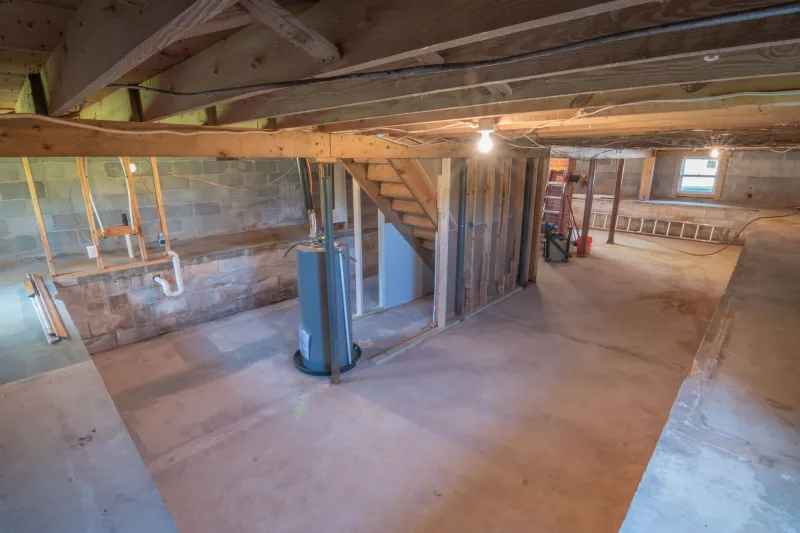
Buyers should be alert to several visible warning signs. Horizontal cracks in basement walls are among the most serious, often indicating lateral soil pressure that is actively compromising structural integrity. Stair-step cracks running diagonally through mortar joints in block foundations suggest differential settling. Efflorescence — the white, chalky residue left behind when water moves through masonry and deposits mineral salts — points to chronic moisture infiltration even when the basement appears dry at the time of inspection.
During any inspection of a pre-1980s home, buyers should specifically ask the inspector to assess the foundation type, document the location and pattern of any visible cracks, and evaluate the grading of the surrounding yard. Improper grading that directs water toward the structure is one of the leading contributors to basement moisture problems throughout the region.
Repair costs vary considerably depending on severity. Basic waterproofing and drainage improvements may fall in the range of $5,000 to $15,000. Structural repairs involving wall reinforcement, carbon fiber straps, or underpinning can escalate to $20,000 or more. For homes with significant foundation compromise, buyers should obtain a structural engineer's independent assessment before proceeding — a general home inspector, however qualified, operates at a different level of technical depth.
Roof Systems: Age Is Not Just a Number
Roof replacement is one of the most common large expenses buyers inherit when purchasing older Central Pennsylvania homes. A standard asphalt shingle roof carries a functional lifespan of roughly 20 to 30 years under typical conditions. Many homes built in the 1960s and 1970s have already cycled through one or more roof replacements, and some have not.
Beyond shingle age, buyers should be attentive to the underlying structure. Older homes frequently used skip sheathing — spaced boards rather than continuous plywood decking — beneath their roofing material. When a full replacement is eventually required, upgrading to solid decking adds cost but is generally considered best practice. Buyers should also inquire about the condition of flashing around chimneys, skylights, and dormers, as these transition points are disproportionately responsible for leaks.
In the Central Pennsylvania climate, where winters bring freeze-thaw cycles and summers deliver significant rainfall, roof maintenance deferred even a few years can result in interior water damage affecting insulation, framing, and finished ceilings. A roof that appears marginal at the time of inspection may require replacement within two to three years of purchase.
Budget guidance: a standard asphalt shingle replacement on a 1,500 to 2,000 square foot home in the region typically ranges from $8,000 to $18,000 depending on pitch, complexity, and material selection. Metal roofing, increasingly popular for its longevity, commands a higher upfront cost but may be worth considering on homes where the buyer plans a long-term hold.
Key inspection questions to ask: How old is the current roof? Has it ever been replaced, and if so, how many layers of shingles are present? What is the condition of the soffit, fascia, and gutters?
HVAC Infrastructure: Efficiency, Safety, and Hidden Age
Heating and cooling systems in older Central Pennsylvania homes reflect the infrastructure priorities of their era, which frequently means oil-fired boilers, aging forced-air furnaces, and in some cases, original radiator systems that predate the widespread adoption of central air conditioning. Each configuration presents its own set of considerations.
Oil heating remains relatively common in rural and semi-rural portions of the region. Buyers should confirm the age and condition of the oil tank — both above-ground and buried underground tanks carry environmental liability if they are leaking or have leaked — and evaluate whether the system is operating at a reasonable efficiency level. Older oil furnaces and boilers operating at 60 to 70 percent efficiency are not uncommon, and upgrading to a modern high-efficiency unit can meaningfully reduce annual fuel costs.
Natural gas furnaces installed before 2000 may be approaching the end of their practical service life. Heat exchangers in older furnaces can crack over time, creating a potential carbon monoxide hazard that may not be apparent without a thorough inspection. Buyers should ask specifically whether the heat exchanger has been inspected recently and whether the unit has been serviced within the past 12 months.
Central air conditioning is a separate concern in many older homes, where ductwork was added after original construction and may not have been sized or routed optimally. Inspectors should evaluate not only the age of the outdoor condenser and air handler but also the condition and configuration of the duct system.
Budget expectations: furnace or boiler replacement typically ranges from $3,500 to $8,000 installed. Central air conditioning system replacement runs $4,000 to $10,000 or more depending on tonnage and ductwork condition. Buyers who are purchasing a home with aging HVAC components should factor in replacement within a defined planning horizon rather than treating it as a remote contingency.
Building a Realistic Repair Budget Before You Close
One of the most practical steps a buyer can take when evaluating an older Central Pennsylvania property is to build a preliminary repair reserve before making an offer. Rather than waiting for the inspection report to surface issues, buyers who have already internalized realistic cost ranges are better positioned to negotiate credits, request repairs, or make an informed decision to walk away.
A useful framework: for any pre-1980s home, budget a minimum of $15,000 to $30,000 for potential near-term capital improvements, with the understanding that foundation, roof, or HVAC deficiencies could individually push that figure higher. This is not a reason to avoid older homes — many of them represent excellent long-term value in desirable communities — but it is a reason to approach the process with clear eyes and a contingency fund that reflects the reality of what these properties can require.
Central Pennsylvania's older housing stock is genuinely worth considering. The neighborhoods are established, the craftsmanship in many cases is superior to what modern construction delivers, and the price per square foot often compares favorably to newer developments. The buyers who fare best are those who complete their due diligence thoroughly, ask pointed questions during the inspection, and enter ownership prepared for the responsibilities that come with a home that has history.