Breathing Easy: A Central Pennsylvania Homebuyer's Practical Guide to Radon Testing and Remediation
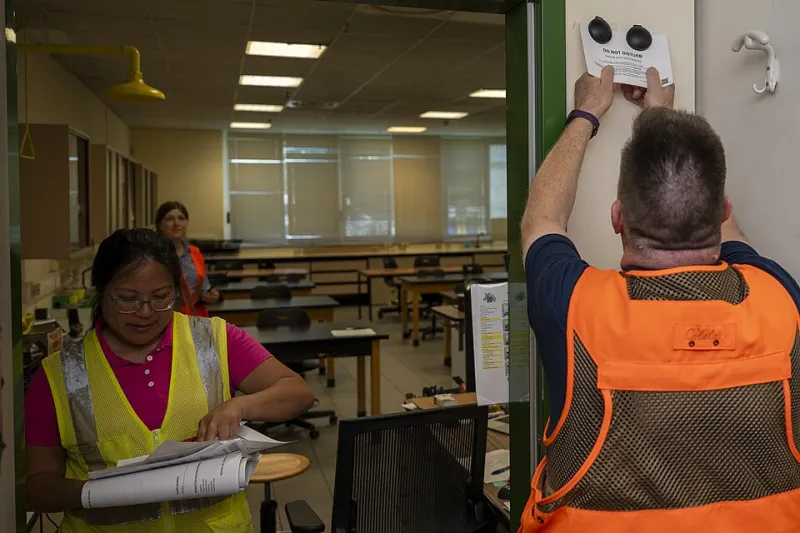
Photo: U.S. Navy photo by Petty Officer 1st Class Sean P Rinner, Public domain, via Wikimedia Commons
If you are purchasing a home anywhere in Central Pennsylvania, radon is not a footnote in your due diligence checklist — it is a headline. The region consistently ranks among the highest-risk areas in the country for elevated radon concentrations, and for good reason. Understanding the science, interpreting test results accurately, and negotiating remediation costs without derailing your transaction are skills every serious buyer in this market should develop before they reach the closing table.
Why Central Pennsylvania Has a Radon Problem
Radon is a naturally occurring radioactive gas produced by the decay of uranium in soil and rock. It is colorless, odorless, and tasteless — which is precisely what makes it dangerous. According to the U.S. Environmental Protection Agency, radon is the second leading cause of lung cancer in the country, responsible for an estimated 21,000 deaths annually.
Central Pennsylvania's particular vulnerability stems directly from its underlying geology. Much of the region sits atop limestone, shale, and uranium-bearing granite formations — rock types that are especially productive sources of radon gas. Cumberland, Dauphin, Lebanon, York, and Lancaster counties, among others, fall within what the EPA designates as Zone 1, its highest-risk classification. That designation means the predicted average indoor radon level exceeds 4 picocuries per liter (pCi/L), the EPA's recommended action threshold.
Beyond bedrock, soil porosity plays a significant role. Soils common to this region tend to allow radon gas to migrate upward relatively efficiently, particularly in areas with karst topography — the porous, cave-riddled limestone terrain that characterizes much of the Cumberland Valley and surrounding areas. Homes with basements or crawl spaces that sit close to the soil surface are especially susceptible to radon infiltration.
What a Radon Test Actually Measures
Radon testing during a home purchase typically takes one of two forms: a short-term test or a long-term test. Short-term tests, which run between two and seven days, are the standard for real estate transactions because they fit within the typical inspection window. A certified inspector places a passive detector — usually a charcoal canister — in the lowest livable area of the home, most often the basement, and the device is then sent to a laboratory for analysis.
The result is expressed in picocuries per liter. Here is how to read those numbers:
- Below 2 pCi/L: Considered acceptable by most standards, though no level of radon is entirely without risk.
- 2 to 4 pCi/L: A gray zone. The EPA considers mitigation at this range to be optional but advisable, particularly for buyers who plan to spend significant time in lower levels of the home.
- 4 pCi/L and above: The EPA recommends mitigation. This is the threshold that typically triggers negotiation in a real estate transaction.
- Above 8 pCi/L: Elevated concern. Buyers should treat this level as a firm condition requiring resolution before closing.
- Above 20 pCi/L: Significant remediation is necessary, and buyers should understand that this is not a minor issue.
It is worth noting that short-term tests are inherently variable. Weather conditions, seasonal pressure changes, and how tightly the home was sealed during the testing period can all influence results. A single test offers a snapshot, not a complete picture. If a result falls near the 4 pCi/L threshold, requesting a follow-up test is a reasonable and professionally supported course of action.
What Remediation Costs — and Who Pays for It
The good news for buyers in Central Pennsylvania is that radon mitigation is neither exotic nor prohibitively expensive. The most common solution is a sub-slab depressurization system, sometimes called an active soil depressurization (ASD) system. A licensed contractor installs a pipe through the foundation floor, connects it to a fan, and vents radon gas safely out of the home and away from living areas. In most Central Pennsylvania homes, installation costs range from approximately $800 to $2,500 depending on the complexity of the foundation, the number of suction points required, and local contractor rates.
For homes with crawl spaces, the process may involve sealing the crawl space floor with a vapor barrier and running a vent pipe through it. This variation can push costs slightly higher, particularly in older homes where crawl space conditions are irregular.
Once installed, a properly designed mitigation system typically reduces indoor radon levels by 50 to 99 percent. Annual maintenance consists largely of checking that the system fan is operating — a simple visual inspection most homeowners can perform themselves.
Negotiating Radon as Part of Your Purchase
Discovering elevated radon levels does not mean walking away from an otherwise sound property. In Central Pennsylvania's market, where radon-prone conditions are the norm rather than the exception, experienced agents and sellers generally expect the topic to arise. The question is how to address it constructively.
Your negotiation options typically fall into three categories:
Seller-funded remediation before closing. The seller hires a licensed radon mitigation contractor and has the system installed prior to settlement. A post-mitigation test is then conducted to confirm the system is working effectively. This approach is often the cleanest resolution, as it removes uncertainty from the transaction.
A closing credit in lieu of remediation. The seller provides a credit — typically reflecting the cost of installation — and the buyer arranges remediation after taking ownership. This approach suits buyers who want control over contractor selection and timing, though it does mean living with elevated radon levels until the work is completed.
Price adjustment. In some cases, particularly where a seller is unwilling to engage with remediation, a straightforward reduction in the purchase price may be negotiated. This is less common but remains an option.
One caution: avoid accepting a verbal assurance from a seller that the home's radon levels are manageable without independent testing. Radon conditions can change over time, and any prior test results should be reviewed alongside a fresh test conducted during your inspection period.
Choosing the Right Testing and Mitigation Professionals
Pennsylvania does not currently require radon professionals to hold a state license, though the Pennsylvania Department of Environmental Protection maintains a list of certified measurement and mitigation professionals through the National Radon Proficiency Program (NRPP) and the National Radon Safety Board (NRSB). Buyers are strongly encouraged to select professionals who hold one of these certifications.
When selecting a mitigation contractor, request references from completed jobs in the area, ask for a written warranty on their work, and confirm that they will conduct a post-mitigation test to verify the system's effectiveness. A reputable contractor will stand behind their results.
Keeping Radon in Perspective
Radon is a manageable condition, not a deal-breaker. The vast majority of Central Pennsylvania homes that test above the EPA action level can be effectively mitigated for a cost that represents a small fraction of any home's purchase price. What matters is that you test, that you understand your results, and that you negotiate from a position of knowledge rather than anxiety.
At Central Penn MLS, we believe informed buyers make better decisions — for themselves and for the long-term health of this region's real estate market. Radon is one more piece of information that, properly understood, helps you close with confidence rather than uncertainty.