Underground Equity: How Central Pennsylvania Homeowners Are Turning Basements Into Their Best Investment
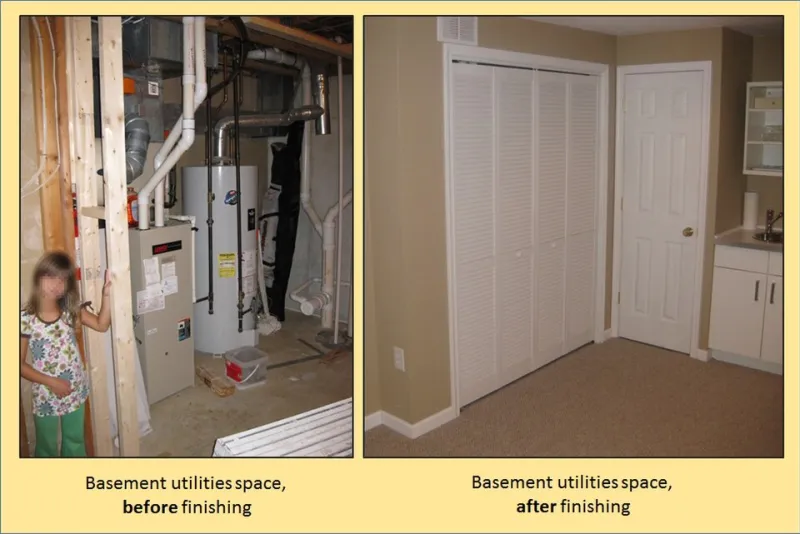
Photo: Thekohser, CC BY-SA 4.0, via Wikimedia Commons
For many Central Pennsylvania homeowners, the basement has long served as a utility corridor — a place for the water heater, the holiday decorations, and not much else. That perception is changing rapidly. As housing inventory remains tight across counties like Cumberland, Dauphin, York, and Centre, buyers and sellers alike are paying closer attention to the square footage that sits just below the main living level. Finished basements are emerging as one of the region's most compelling home improvement investments, and the numbers are beginning to reflect that shift.
Why Central Pennsylvania Basements Are Built for This
Not every housing market is equally suited to basement finishing projects. In parts of the country where slab-on-grade construction dominates, the concept simply does not apply. Central Pennsylvania, however, has a long tradition of full-depth basement construction, a legacy tied to the region's frost line depth, which typically extends 36 inches or more below the surface. Builders have historically excavated full basements not only to reach stable footing but also to protect foundations from the seasonal freeze-thaw cycles that characterize the region's climate.
The result is that a substantial portion of Central Pennsylvania's housing stock — particularly homes constructed between the 1940s and the 1990s — already contains eight to nine feet of ceiling height below grade. That is precisely the clearance that contractors and designers consider the minimum threshold for comfortable finished living space. Older properties, particularly those with stone or block foundations common in communities like Carlisle and Gettysburg, may require additional waterproofing consideration, but the structural bones are frequently already in place.
The Financial Case: What Finished Basements Return in This Market
Regional real estate data consistently places finished basement projects among the higher-returning renovations available to Central Pennsylvania homeowners. While national remodeling cost-versus-value surveys suggest average returns in the range of 70 to 75 percent on basement finishing projects, local market conditions can push that figure higher when demand for move-in-ready homes is elevated — as it has been across much of Central Pennsylvania in recent years.
Perhaps more significant than the percentage return is the raw dollar figure. A basement finishing project that adds 800 to 1,200 square feet of functional living space can increase a home's appraised value by $25,000 to $55,000 depending on location, finish quality, and the specific amenities included. In higher-demand submarkets such as Hershey, Mechanicsburg, and the State College area, that ceiling rises further, particularly when the finished space includes a bathroom, egress window, and dedicated utility separation.
For sellers, a finished basement also expands the pool of qualified buyers. Families seeking home office space, multigenerational households requiring flexible living arrangements, and buyers who want dedicated recreation or media rooms are all drawn to homes where that space already exists and has been properly permitted.
Regional Climate and Soil: What Homeowners Must Account For
Central Pennsylvania's geology presents both opportunities and challenges for basement finishing projects. The region's limestone-rich karst topography, particularly prevalent in the Cumberland Valley corridor, can create drainage complexities that require professional evaluation before any finishing work begins. Hydrostatic pressure from seasonal groundwater movement is a legitimate concern in certain areas, and no amount of drywall or flooring will compensate for a moisture problem that has not been properly addressed at the foundation level.
Responsible contractors working in this region typically begin basement finishing consultations with a moisture assessment. Interior drainage systems, sump pump installations or upgrades, and vapor barrier applications are standard preliminary steps for many projects. Spray foam insulation applied directly to foundation walls — rather than traditional batt insulation — has become increasingly common in Central Pennsylvania basements because it simultaneously addresses thermal performance and moisture infiltration.
Homeowners in areas with a history of radon presence, which includes significant portions of Dauphin, Lancaster, and Lebanon counties, should also factor radon mitigation into their baseline project costs. Pennsylvania's Department of Environmental Protection recommends testing before and after any significant basement renovation, and mitigation systems — when needed — typically add $800 to $2,500 to the project budget.
Permit Requirements and the Importance of Compliance
Finishing a basement without the appropriate municipal permits is a mistake that Central Pennsylvania homeowners sometimes make in an effort to reduce costs or expedite timelines. The consequences of doing so, however, can be significant. Unpermitted finished space may not be counted in a home's official square footage at the time of sale, which directly affects appraised value. More critically, unpermitted electrical, plumbing, or egress work can become a liability during the inspection process and may require costly remediation before a transaction can close.
Permit requirements vary by municipality across Central Pennsylvania, but most jurisdictions require building permits for basement finishing projects that involve framing, electrical modifications, plumbing additions, or egress window installation. Many townships and boroughs also require inspections at specific project milestones. Working with a licensed general contractor familiar with local code requirements is the most reliable way to ensure that the finished product meets both safety standards and marketability expectations.
Egress windows, in particular, deserve special attention. Pennsylvania's Uniform Construction Code requires that any basement bedroom or sleeping area include an egress window that meets minimum opening dimensions. This requirement is not merely a formality — it is a life-safety provision, and appraisers and buyers' agents are trained to verify compliance.
What Successful Transformations Look Like Locally
Across Central Pennsylvania, the most successful basement finishing projects share a few common characteristics: thoughtful space planning, quality moisture management, and a clear sense of how the space will function for the home's likely buyer profile.
In suburban neighborhoods near Harrisburg and York, homeowners have found strong market response to finished basements that include a half or full bathroom, an open recreation or family room area, and at least one dedicated room suitable for use as a home office or guest bedroom. These configurations appeal broadly without over-specifying the space for a single use.
In college-adjacent markets like State College and Lock Haven, finished basements with separate exterior access — effectively creating a semi-independent living unit — have attracted particular interest from buyers who anticipate rental income potential or multigenerational living needs. These projects require additional permitting scrutiny but can command meaningfully higher premiums at resale.
Luxury finishes, including wet bars, custom built-ins, and home theater configurations, can enhance the appeal of a finished basement but tend to return less proportionally than functional, well-executed standard finishes. The Central Pennsylvania market rewards practicality and livability over extravagance at the basement level.
A Strategic Perspective for Buyers and Sellers
For homeowners planning to sell within the next three to five years, a well-executed basement finishing project represents one of the few renovation categories where the investment is likely to be meaningfully reflected in both the appraised value and the final sale price. For buyers evaluating properties with unfinished basements, it is worth calculating the potential value that a future finishing project could unlock — and factoring that into purchase price negotiations accordingly.
Central Pennsylvania's housing market continues to reward homes that offer functional square footage, flexible living arrangements, and move-in readiness. The basement, long overlooked as a storage afterthought, is increasingly recognized as the foundation — in every sense — of a home's long-term value story.